Community Playtesting Events That Generate Content and Feedback Simultaneously
Developers can gather critical feedback and generate shareable content in a single playtest session.
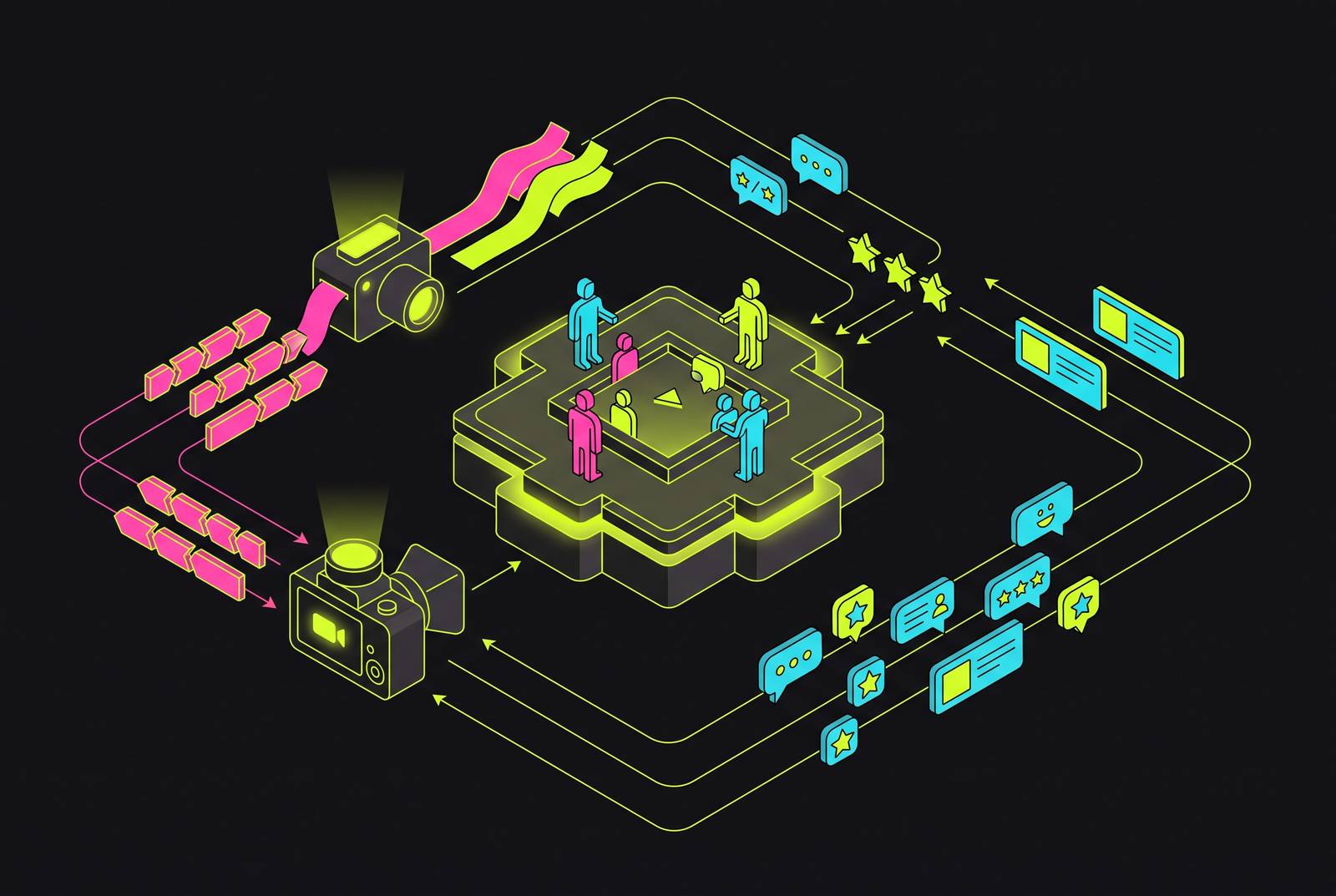
A community playtest is no longer just a bug hunt. It is a content shoot, a trust-builder, and a preview screening, whether the developer planned it that way or not. For years, the sequence was simple: fix the game quietly, then promote it once it was ready. That order made sense when creators had the budget and the runway to keep a game under wraps for months. Most indie and hobbyist developers today have neither, and the AI-assisted tools and no-code platforms that made shipping a game faster also brought a wave of new creators into the field, all competing for the same scroll of player attention. Building an audience while the game is still rough around the edges has stopped being optional and started being the only realistic path to a launch anyone notices. A playtest that produces only a spreadsheet of bug reports is a missed shift, not a finished job, because that same two-hour session could have produced clips, reactions, and a few hundred new eyes on the project. The output a creator gets from a playtest is a design choice, and right now, most creators are only designing for one.
What makes a playtest event different from a playtest session
A session is two friends and a laptop. An event is a crowd, a clock, and a set of unspoken rules everyone in the room agreed to follow just by showing up. That third ingredient, the social contract, is doing more work than it gets credit for. A private playtest between a developer and a couple of friends produces notes, maybe a few sticky comments about the jump mechanic feeling floaty. An event produces witnesses. It produces people who showed up knowing they'd be asked to react, test, and talk, so they're primed to do exactly that, out loud, sometimes on camera. The Indie Playtest Fest shows the contrast well: its private exchange format and its public event format are not the same tool used twice. One is built for quiet, calibrated feedback between developers who already speak the language of unfinished games. The other is built for an audience that showed up to be part of something. Choosing between them is the first real design decision a creator makes about what the session is for.
Choosing the right audience for each stage of the game
Who gets invited into the room determines what the room can produce, and getting that wrong wastes the event before it starts. Developer-to-developer audiences are forgiving. They know placeholder art is placeholder art, they've seen a hundred broken onboarding flows, and they'll give notes that actually point at the design problem instead of just saying "this is confusing." What they won't give is a viral clip, because a developer narrating a bug is not the same as a player gasping at a jump scare. General player audiences are the opposite bet. They react with real confusion, real delight, real surprise, all of which make for shareable footage, but they'll only give an early build one shot. If the onboarding breaks in the first ninety seconds, that player is gone and isn't coming back for round two. The Indie Playtest Fest's Playtest & Feedback Exchange Jam bakes this logic into its own rulebook: it stays intentionally low-exposure, never promoted to a general audience, because an early-stage game needs the patience of other developers, not the impatience of casual players scrolling past. A third audience sits in between those two extremes: content creators invited as participants. Briefed well, they react authentically for their own audience while still catching design issues a casual player might miss. The decision is about matching the audience to what the game, at this stage, can actually survive.
Structuring the session so feedback collection happens by design, not by accident
Good feedback doesn't happen because people cared enough to speak up at the end. It happens because the structure was built before anyone walked in the door. Time-boxing is one of the simplest levers available, and it's underused. Telling testers a session runs exactly two hours, or exactly four, changes how they engage. It creates urgency instead of aimless wandering, sharpens what people pay attention to, and makes it far easier to schedule a debrief while the reactions are still fresh instead of reconstructed from memory three days later. That mutual obligation keeps the room focused and the feedback flowing both directions. The second lever is just as simple: pre-written observation prompts beat open-ended questions every time. Asking "what broke," "what confused you," and "what made you want to keep playing" produces notes a developer can act on immediately. Asking "so, what did you think?" produces a shrug and a compliment. Writing three good prompts takes about five minutes, and it's five minutes that separates a useful debrief from a polite one.
Designing the same session to capture shareable content at the same time
This is where the two jobs actually merge into one. Capturing content doesn't require a second event, a camera crew, or a budget line that didn't exist last week. It requires noticing, ahead of time, which moments in the game are worth pointing a lens at and making it effortless for the people in the room to capture and share them. The content a creator needs isn't polished footage, it's genuine reaction: the confusion, the surprise, the small victory lap when a player finally beats the level that's been kicking their teeth in. Playtesting produces those moments constantly, so the raw material is already there every single session. Designing for capture means setting up a space where recording feels normal rather than like surveillance, telling participants that clips might get shared, and picking out two or three spots in the game ahead of time where a visible reaction is likely, whether that's a jump scare, a twist mechanic, or the first time a player realizes the controls actually make sense. Screensharing, phone recording, or whatever capture tool a platform offers natively can all do the job; the only rule that matters is that participation stays opt-in and gets framed as a contribution. A tester's unscripted reaction to a mechanic performs best in this setup, because players trust other players in a way they simply don't trust a studio's highlight reel. A single low-friction ask at the end, something as plain as "if you had fun, post one thing that surprised you," tends to produce organic posts a developer can amplify.
Using the event's format and timing to build anticipation before the session and extend its reach after
An event that gets announced, documented, and followed up on builds a content arc that a quiet Discord call never will, because the value isn't confined to the hours the session actually runs. Before the event, a public announcement does real work on its own: it signals that the game is alive and moving forward, it gives early community members a sense of ownership before they've even touched the build, and it generates the first wave of organic reach before a single person has pressed play. How that announcement gets framed changes whether it pulls in engaged participants or just fills a slot. "Help shape how this mechanic works" pulls in engaged participants far better than "we need testers," because one invites people into the process and the other just asks for a favor. During the event, giving the session a name, a monthly playtest night, or a milestone-tied event, makes it something people can share and something a creator can repeat. The Indie Playtest Fest exchange runs on a monthly cadence precisely because a named, recurring format builds a community around the act of playtesting itself, not just around any one game. After the event, a short public writeup covering what got tested, what changed, and what players actually said turns a single session into a visible chapter of the game's development, something an audience can follow the way they'd follow a serial. That visible process functions as its own kind of proof: players who watch a creator respond to real feedback in real time start trusting the project, and investing in it, long before launch day arrives. None of this works as a one-off. The format is built to repeat.
Matching the event format to where the game lives
A game that already lives on a platform with a built-in player base starts the event with distribution already half solved before anyone sends an invite. UGC platforms come with an existing audience baked in, so a creator running a playtest event doesn't need to build a crowd from zero before the first session even happens. That changes the math on content capture, too: a clip or post that links straight back to a live, playable build can turn a moment of interest into an actual play session within minutes, not days. For creators building with AI-assisted tools, including browser-based platforms that handle the design, building, and scripting work from a plain-text description, the time between an idea and a playtestable build is short enough that running several playtest rounds inside a single development cycle is a realistic plan, not a stretch goal. That speed changes how often an event can happen. When shipping an updated build costs little in time or effort, a creator can run more frequent, lower-stakes playtest events, with more chances to capture content and more cycles of real feedback inside the same stretch of calendar time. Hybrid genres, games that mix mechanics across tycoons, obbies, horror, and shooters, tend to pull in a wider range of players, which widens the range of reactions a single session can produce, and wider reactions mean more raw material for the content side of the event.
Developer-to-developer exchange as the right first move before a public event
Not every build is ready for an audience, and pretending otherwise is how a developer accidentally manufactures bad press for their own game. A player who hits a broken or confusing build in a public session usually doesn't come back for a second look. If that reaction gets captured on camera, it becomes content working against the game. Developer peers are built for this exact stage. They understand an unfinished UX, they tolerate placeholder art without blinking, and their feedback is calibrated to the design intent behind a feature rather than just the surface experience of bumping into it unprepared. That kind of feedback is much harder to get from a general audience, who mostly just notice what's broken and move on. The sequencing principle is simple: run the peer exchange first to reach a build that's stable and onboarding-functional, then open the doors to a broader community audience designed around content capture. These two event types are sequential stages of the same arc, not competitors for the same slot on the calendar, and skipping the first one doesn't save time, it just moves the rough draft of the game in front of an audience that won't give it a second chance.