What You Can Build With an AI Game Generator in One Hour
Multiple AI agents working in parallel can deliver a playable game in under 60 minutes.
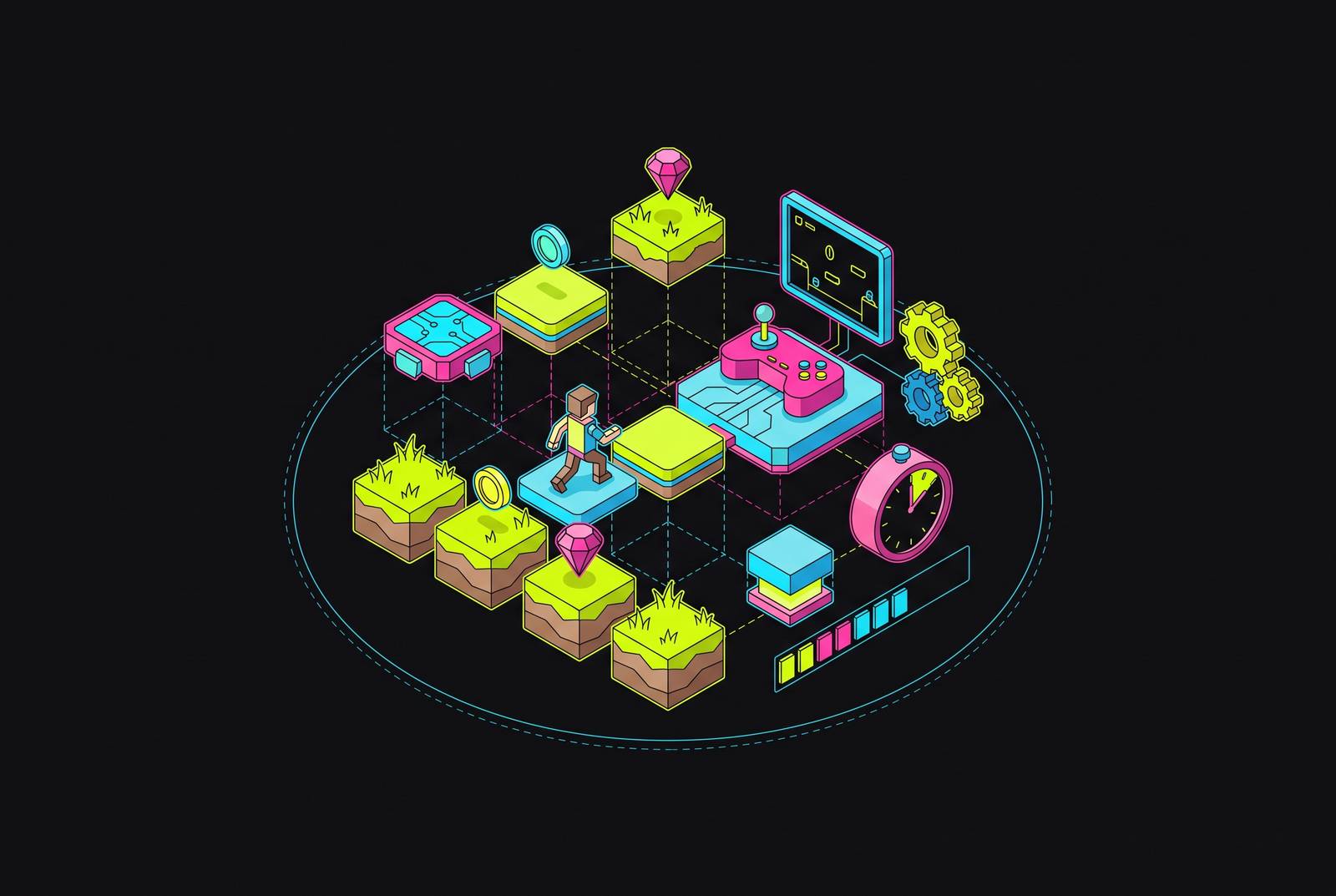
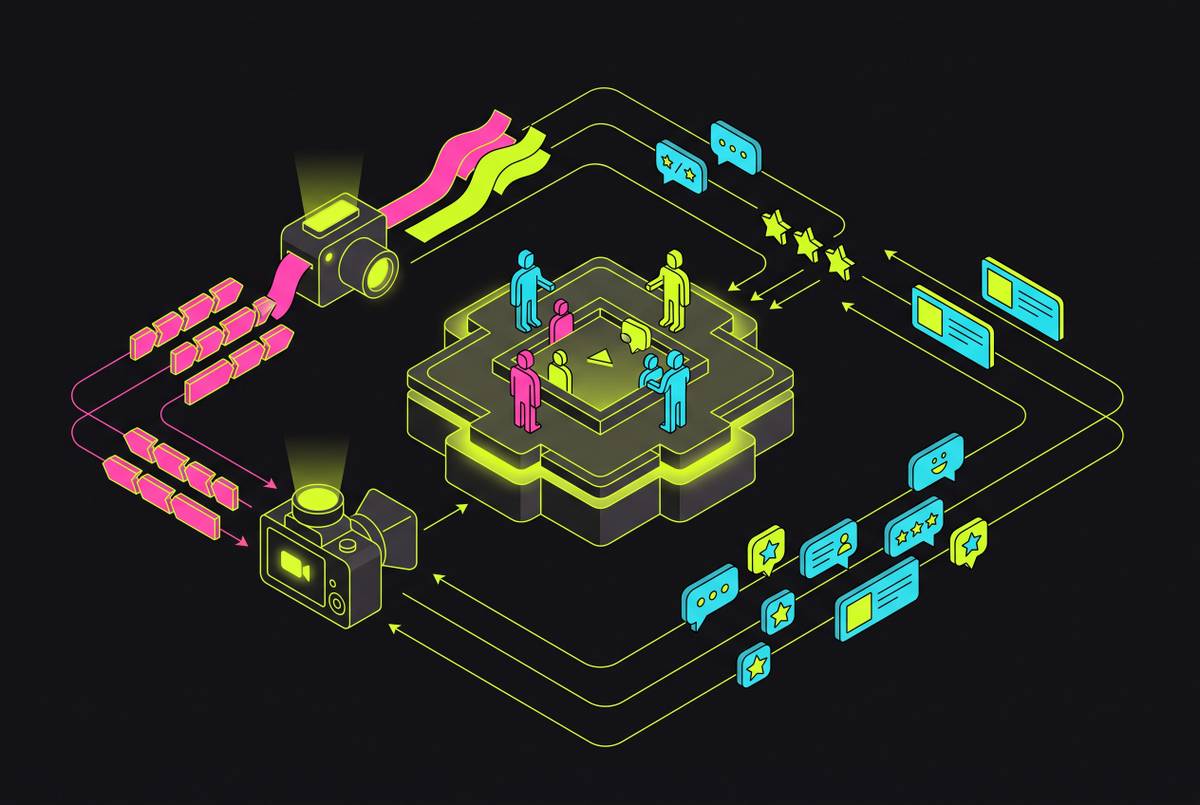
Type a description of a game, and four separate AI agents go to work on it at once. A director agent reads the brief and asks clarifying questions if the request is vague. A coder writes the actual game loop. An artist generates sprites or 2D assets based on a concept that got approved earlier in the process. A sound designer scores the thing and builds out the sound effects. None of this happens in sequence. It happens in parallel, which is the only reason an hour is enough time to get anywhere.
The reason the output holds together, instead of looking like four strangers each built a piece without talking to each other, is shared context. Every agent is working from the same brief. That's why the music matches the level instead of sounding like it wandered in from a different game, and why the sound effects match the sprites on screen instead of clashing with them. Coherence here is the direct result of everyone reading off the same page.
What comes out the other end is a URL. Not a zip file, not a project you need an engine installed to open. A browser-playable link you can press play on immediately, then iterate on in plain language, the same way you'd text a friend a correction. A playable first version can appear within minutes of the first prompt. The rest of the hour is spent going back and forth in chat, nudging things, and watching the fixes re-ship to that same link.
What's realistic to expect from that hour depends heavily on what you're building. A tycoon, an obby, a shooter, and a horror game all draw on the same engine underneath, but they don't arrive at the same destination by the one-hour mark. That gap is the whole subject of this piece.
Why genre choice matters most before you type your prompt
Genre feels like a flavor choice. Genre decides how many systems the AI needs to wire together and get talking to each other, and that number is the single biggest factor in whether your one-hour build turns into something playable or something that falls apart under its own weight.
A tycoon needs an economy loop. A shooter needs collision detection and projectile physics working together without glitching. A horror game needs atmospheric triggers that fire at the right moment to actually scare someone. Each of these is a different stack of moving parts, and each part has to be built, then tested against the others. An obby, by comparison, is mostly about space and movement: does the platform exist where it should, does the jump arc make sense, does the checkpoint save progress. Fewer systems means the AI reaches something coherent faster. A shooter or an RPG hybrid, on the other hand, is stacking system on top of system, and each one needs its own round of tuning before the whole thing feels right.
This is why scope is the quiet killer of one-hour builds. Asking for "an MMO with PVP and a crafting tree" describes three separate games stapled together, none of which will be playable by minute 60. System count scales with the request, not ambition.
The fix is to write your brief as a single sentence: one mechanic, one win condition, one player fantasy. Whatever genre falls out of that sentence naturally is the genre you should build. The four genres walked through next, tycoon, obby, shooter, and horror, aren't the only options on the table, but they span the range from "barely any systems" to "systems stacked on systems," and together they map out what the hour can realistically deliver.
A Tycoon Build at the One-Hour Mark
A tycoon is arguably the cleanest match between what AI is good at and what the genre actually demands. Tycoons run on declarative logic: income rates, upgrade costs, unlock thresholds. That's a spreadsheet wearing a game's clothing, and spreadsheets translate into working code about as smoothly as anything gets.
By the one-hour mark, a tycoon build should have a working income loop: collect, spend, expand, repeat. It should have structures you can place or that get placed automatically. It should show visible progression, so the player can see the thing they built last week (or last minute) still paying off. And it should have some kind of win condition or idle state, so the loop has an endpoint or at least a sense of direction. Art for a tycoon tends to come together quickly too. Isometric and top-down tile sets are common enough in asset libraries that visual coherence gets locked in early, usually at the concept-screenshot stage, before a single building gets placed.
What won't be there yet is balance. The economy will feel too generous or too stingy until someone plays it and adjusts the numbers by hand. There won't be a real difficulty curve, and there won't be late-game depth, the kind of systems that keep a tycoon interesting after the fiftieth upgrade. Those are tuning problems, and tuning is a human job that an hour of generation doesn't replace. What the hour honestly delivers is a tycoon skeleton that runs: money accumulates, upgrades unlock, the loop functions. Getting that loop to feel good is the next project, not this one.
Tycoons are also one of the most consistently popular genres among players, so a functional prototype is something with an actual audience ready to try it the moment it ships. On the platform side, studs.gg (built by Paralov) handles the design, the 3D building, and the scripting automatically from a plain-text description, and a tycoon brief tends to be a strong fit for that pipeline specifically because the genre's logic is exactly the kind of structured, rule-based system the AI is built to scaffold.
What an obby build delivers
If there's a genre where the one-hour promise gets fully delivered on, it's the obby. Short for "obstacle course," an obby's entire job is to test whether a player can get from point A to point B without falling off something. That's a spatial and kinematic problem, not an economic or narrative one, and it happens to be the problem AI handles fastest and most completely.
An hour should produce a full sequence of challenges with physics that behave consistently from one jump to the next. It should have a checkpoint or respawn system, so dying doesn't send you back to the start screaming into the void. It needs a clear beginning and end, and a visual theme that runs through the whole level instead of switching styles halfway through. None of this requires an economy to balance. None of it requires NPC behavior to script. There's no projectile collision to calibrate. The system count is low enough that the AI can land on something coherent on the first pass, not the fifth.
Art direction is where obbies really show off the pipeline's range. Describe "neon city," "haunted castle," or "space station," and those words translate directly into tile choices and geometry the artist agent can lock from a single concept screenshot. The parallel-agent setup is most visible here too: while the coder sets up jump physics and checkpoint logic, the artist is generating the geometry set, and the sound designer is scoring the atmosphere, all working off the same brief so the pieces click together instead of clashing.
There's a practical angle here too. Obbies are cheap to build relative to the audience they can reach, which has long made them a sensible first project for new creators. An hour-long AI build lowers that bar even further. The honest caveat: mechanics will be correct, but feel won't be obsessively tuned. A jump that works and a jump that "lands right," the kind that feels satisfying in your gut, needs iteration the hour doesn't fully provide. But of the four genres covered here, the obby gets closest to the finish line before the clock runs out.
What a shooter build achieves in one hour
A shooter is buildable in an hour. It's also the genre where the gap between "it runs" and "it feels good" is most visible the moment you hit play.
The deliverables by hour's end: a shoot-and-hit loop that actually registers hits, basic movement and collision, some kind of respawn or health system, and a win condition, whether that's eliminating enemies, surviving a timer, or hitting a score. The coder agent scaffolds the projectile logic and hit detection from an existing genre template. The artist generates a consistent environment and character set. The sound agent produces the gunfire, the hit markers, the score that's supposed to keep your pulse up. For 3D shooters specifically, there's more to coordinate: cameras, controllers, and collision all have to work together, and a one-hour 3D build tends to come out looking more like a blockout, a rough sketch of an arena, than a finished one.
The places where it shows are predictable: weapon feel, movement responsiveness, and hit feedback. These are tuning problems, not generation problems, and tuning takes iteration the hour hasn't finished yet. A jump that floats a beat too long. A shot that connects but doesn't visually register as a hit. A respawn point that drops you in the open with no cover. None of that is a failure of the AI. It's what a first build of any shooter looks like, by hand or by machine, before someone goes back in and fixes it.
The fair objection here is that game feel in action games is disproportionately about tiny adjustments, half a degree of recoil, a few frames of hit-stop, the stuff that takes real playtesting to dial in. That's true, and the one-hour build doesn't pretend otherwise. What it gives you instead is a functional loop to tune from, which is a lot faster than starting with a blank project and no code. A 2D top-down shooter, something like a horde survivor or an arena shooter, reaches a more complete state in that same hour than a first-person or third-person 3D build does, simply because there are fewer systems to coordinate and the art style locks in more easily.
What a horror experience produces in one hour
Horror is where the math flips in an unexpected direction. The genre depends less on deep interaction systems and more on atmosphere, lighting, sound, pacing, the stuff that makes a hallway feel wrong before anything even happens in it. AI generation is strong at atmosphere. A one-hour horror build can feel genuinely unsettling even when the underlying mechanics are thin.
By the end of the hour, expect a consistent atmospheric environment: dark geometry, particle effects, props placed in a way that tells a story without a single line of dialogue. Ambient and reactive sound design comes along with it, and at least one tension mechanic, hiding, fleeing, surviving, solving something under pressure. The sound designer agent does disproportionate work here. Ambient drones, stingers that hit at the right moment, and silence used deliberately are all things that respond well to plain-language prompts and get built in the same pass as the environment itself. Visual atmosphere, fog, low light, a prop placed just slightly wrong, translates well from a concept screenshot locked early on, and the art pipeline tends to nail that style reliably.
True unpredictability, the kind of AI-driven enemy behavior or randomized event placement that makes a horror game worth playing twice because you never know what's coming, is hardest to generate in an hour. That needs systems tuning an hour doesn't allow for. A one-hour horror build tends to land closer to a linear escape scenario or a survival-timer experience than a dynamic, replayable horror sandbox, and framing the brief that way, "a horror escape room in an abandoned hospital" rather than an open-world horror game, produces a far more complete result. What the genre demonstrates, more than any other on this list, is that AI's range isn't limited to mechanical systems. It extends into mood, which turns out to be just as buildable as a jump arc or an income loop.
How to get the most out of the hour
Looking across all four genres, the patterns that separate a strong one-hour build from a weak one are habits that apply no matter what's being built, not genre.
Start by scoping the idea down to one core loop, described in a single sentence, before opening any tool. The AI speeds up building. It does not make decisions about what to build, and scope sprawl, trying to cram an economy, a combat system, and a crafting tree into one brief, is still the number one reason a one-hour build collapses. Favor 2D over 3D unless the concept genuinely needs three dimensions. 2D consistently reaches a more polished, coherent state in an hour, across every genre covered here, and that choice gets locked in at creation, so get it right at the start rather than fixing it later. Approve the concept screenshot before any assets get generated. Skipping that step risks a collage of mismatched styles that's harder to untangle after the fact than it would have been to just start over.
Treat the first playable version as the opening move, not the finish line. Iterating in chat is cheap, and the distance between a rough first build and something genuinely shareable almost always closes during that iteration, not during the initial generation. That's also where the real decisions live: tuning how something feels, adjusting difficulty, figuring out what's actually fun to play. Those are calls a human still has to make, and the one-hour window is best spent making them once the basic loop is already running rather than waiting for the AI to guess.
The browser-first, no-install setup underneath it is what makes this possible. Paralov's approach skips installation and local setup entirely, so the moment a description is finished, a playable URL is already sitting there in the browser, no engine download, no build step standing in the way. That's part of why the iteration cycle compresses into a single hour instead of spreading across a weekend: sharing the result is as simple as sending a link. The gap between building something and getting real reactions to it shrinks right alongside the build itself. The distance between having an idea for a game and having a published one used to be measured in months. The one-hour build is the proof that it's now measured in minutes.